Friends have been asking me about cloth diapering so I might as well write about it. Just the basics because a more in-depth discussion could lead to addiction (I know moms who buy them even if their toddlers are already potty trained just because of the cute prints).
This post is a bit long and can be overwhelming. I know it’s hard to digest everything but you’ll get the hang of it. Yes, there is science in cloth diapers. Especially to those who go beyond the use of nappies (some mommies even have excel documents comparing absorbency of soakers). But I will not go into that. Again, just the basics, based on my experience and what I’ve read.
CLOTH DIAPERS are reusable diapers. Think modern lampin, upgraded with snaps or Velcro and absorbent inserts or soakers. Also known as CDs to cloth nappying moms.
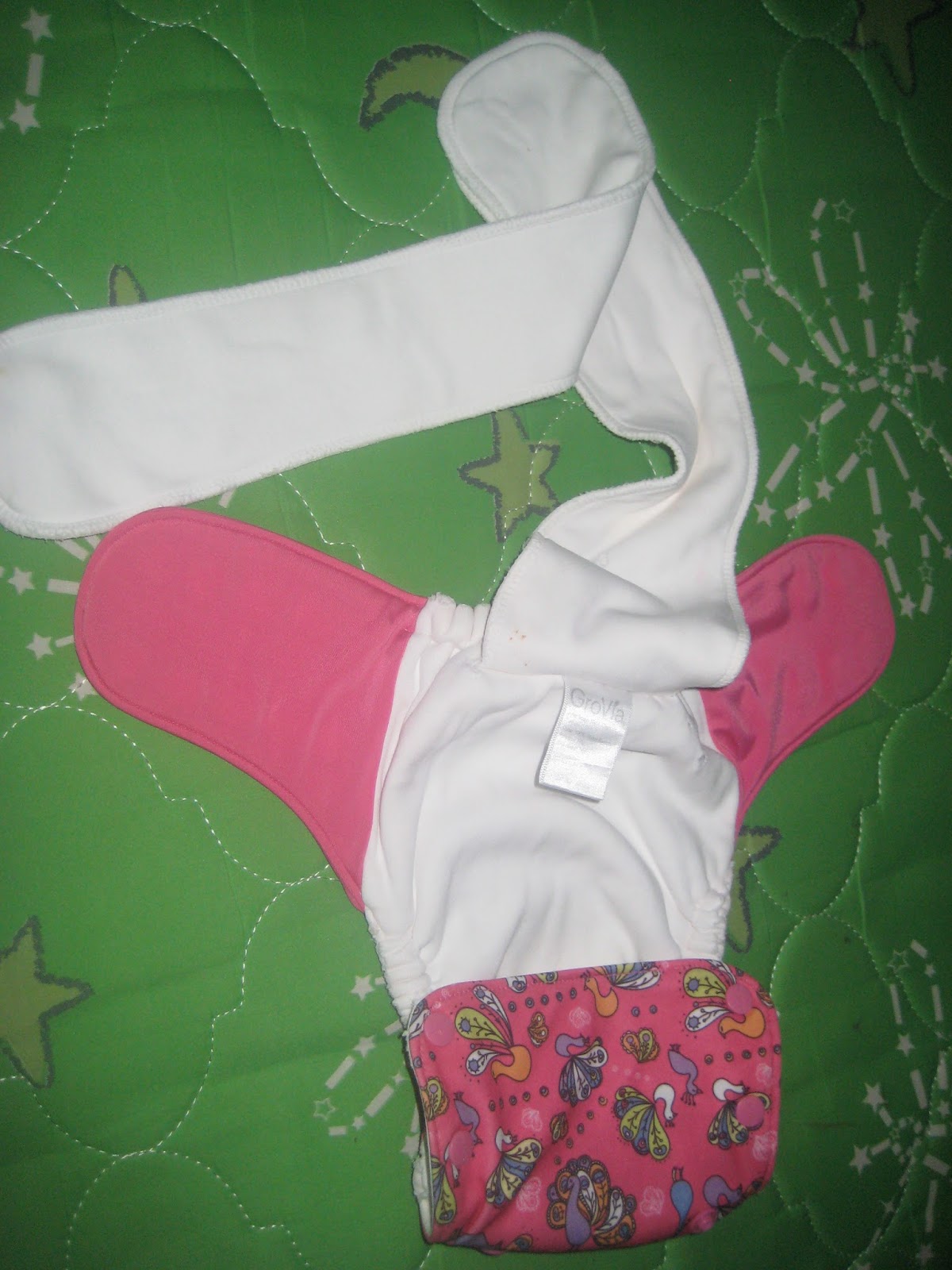
There are 2 PARTS OF CLOTH DIAPERS. Shell and inserts/soakers. Shell refers to the body of the diaper. This goes around your baby’s bum and is secured with snaps or Velcro in front. Inserts and soakers refer to the fabric that absorbs your little ones’ wee and catches the poop.
Most nappies are OSFM or One Size Fits Most, meaning they are adjustable. This is what those extra snaps are for. But there are also newborn size and large size aside from the regular (OSFM) ones.
Adjusting Hybrid fitted nappy (Fold-down)
There are 4 COMMON TYPES OF CLOTH DIAPERS.
Pockets have a pouch where you put the inserts in. It usually has waterproof outer lining made from PUL (polyurethane laminate which keeps the wetness from leaking out) and an inner microfleece or suedecloth inner lining (this is the one in contact with your babys bum and keeps it dry). The most common inserts are made of microfiber, bamboo cotton, bamboo charcoal and hemp. Pockets dry faster and last longer. But in warm weather, the PUL lining is not so breathable so baby’s bum may perspire a lot (same when you use disposable diapers). But if you air out baby’s bum for 10-15 min. every nappy change, it shouldn’t be a problem. As to the inner lining, some babies are allergic to microfleece or suedecloth so better purchase one of each first and see which one your baby prefers.
For
inserts, microfiber dry fast, bamboo charcoal can be placed in direct
contact with baby’s bum while cotton and hemp are very absorbent
but dries longer.
Good pockets: Modia and Bum Genius (suedecloth inner lining), Charlie Banana and Fuzzibunz (microfleece inner lining)
Good pockets but a lot cheaper: Alva and Happy Flute (suedecloth inner lining), Sunbaby, Baby Leaf and Baby Land (microfleece inner lining)
Covers are perfect for the first few months when babies pee every hour or so. Soakers are used with covers. The soakers are made from organic cloth that can be placed in direct contact with baby’s bum. So you have your cover (shell) then on top of it you place the soaker (some can be secured w/ snaps) or folded lampin and it’s ready for your baby. The cover, like pockets has waterproofing (outer lining made from PUL). Once baby pees, you remove the soaker, wipe the cover and let it air-dry a bit. You can use it again up to 3 times, unless of course your baby poops on the nappy then you have to change everything.
Good covers: Grovia, Flip, Thirsties
Good covers but a lot cheaper: Clue bebe, Baby Chic, Weegro
Hybrid fitteds or HFs are best for Philippine climate. They’re breathable and hypoallergenic. Some moms say this is the best choice when baby sleeps on her side. But a hybrid fitted nappy is also more expensive and though the soakers and shells are made of absorbent cloth, it is not waterproof. Most of my stash are HFs. Not because I prefer it over pockets or covers but because I wanted to support local Filipino WAHMs (work at home moms) who craft beautiful nappies.
Good HFs: PNP, Cottony Tail, Fluffy Pwets, Myook Butts
Good HFs but cheaper: Ego Bum, Hapee Janee, Lily and Luna
AIOs or All in one diapers are cloth nappies with the soakers sewn on the shell. An AIO diaper is also water proof. The soakers normally have stay-dry lining that wicks away wetness from baby’s bum.
Good AIOs: Bum Genius, Grovia
Good AIOs but a lot cheaper: Dandy Nappy
DIAPER CARE
New Nappies need to be PREPPED. Prepping simply means washing ahead to rid of factory residues. I soak new nappies overnight in tap water then wash them with detergent the next day. Others soak natural fibre inserts (bamboo, cotton, hemp) in hot water. Some moms wash these up to 6 times (so they can reach maximum absorbency) before using.
Use DETERGENT without bleach, whiteners or fabric softeners. Nappies should be RINSED well (no bubbles in the final rinse water).
Put used diapers in WETBAG when outside (a bag with PUL lining) or DRY PAIL at home (a pail w/o cover). For diapers with poop, I remove and flush the poop away before putting the soiled nappy in the dry pail. If I have time, I PRE-RINSE. I rinse nappies and hang them dry until laundry day. WE do laundry 2 to 3 times a week.
Stinky nappies need to be STRIPPED. Use RLR detergent (follow directions on packet), vinegar or bleach. For vinegar and bleach, just add a bit to the final rinse.
Let nappies hang dry (inner lining facing up or horizontally) under the sun to disinfect it further. I use our shoe rack for that. Some moms use dyer but with lowest setting as PUL linings and elastics deteriorates with too much heat.
Nappies stay on the bum 2-3 hours for daytime use. At night, boost diaper with extra insert so nappies do not leak and baby can sleep longer. Microfiber inserts can dry skin and cause rashes so make sure you don’t put it directly on baby’s bum and only use them with pockets or insert socks.
 |
| Using microfiber insert stuffed inside insert sock |
If you do laundry everyday, you only need a small stash (10-20 nappies). Keep in mind that newborns change nappies up to 12 times a day, infants up to 8 times a day and toddlers up to 6 times a day.
 |
| Our stash when we started using cloth diapers :) |
When my baby was smaller, we had traditional lampins too (flats and prefolds) and fasten them with a snappi or use them with covers. During rainy days, we use them as inserts when all the inserts are still wet.


How to fold flats:
There you have it. See, it’s not so hard. Just think, you’re doing this to keep your kid away from chemicals found in disposables, save money and lessen your carbon footprint. If you feel like giving up, remember that disposable diapers take 500 years to decompose!
 |
| (photo taken from https://www.snugglebugz.ca/blog/the-pregnancy-files-cloth-or-disposable-diapers/) |